
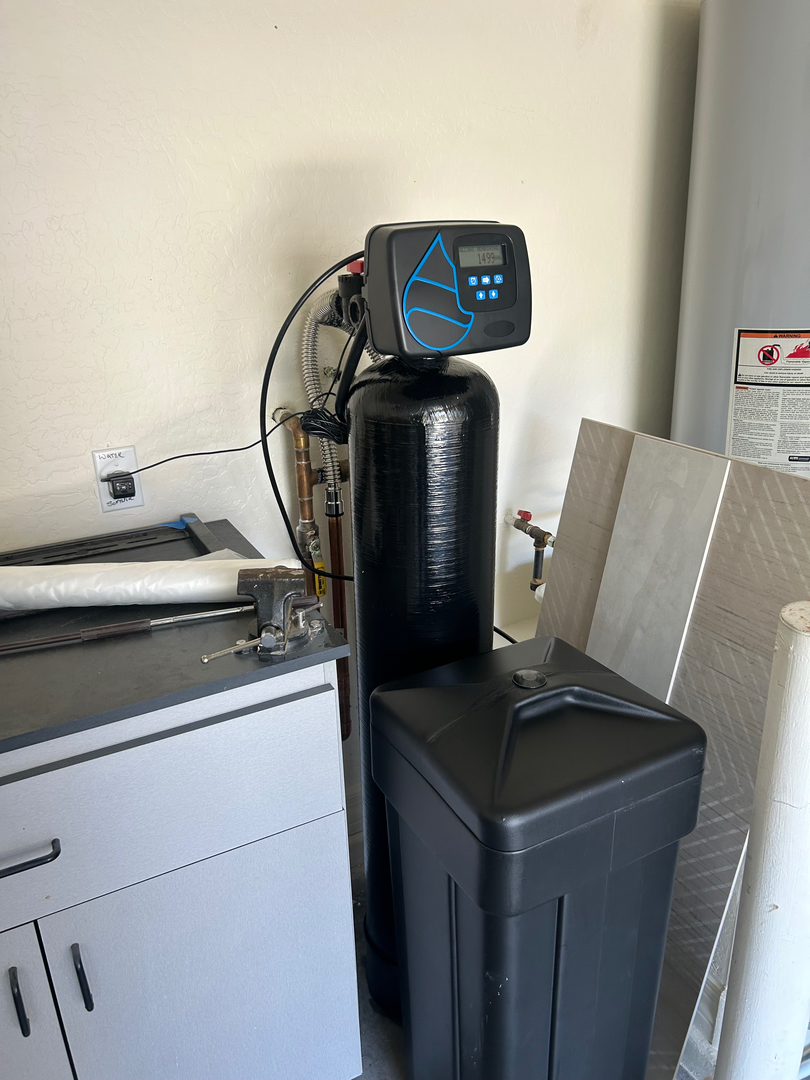
If you are tired of white buildup on the faucets, cloudy glassware, and mineral spots on the shower door, you have probably started looking into whole-home water treatment.
That is usually when the terminology gets confusing.
One company recommends a traditional salt-based water softener. Another promotes a salt-free system that supposedly provides the same benefits without bags of salt. Both products may be presented as water softeners, but they do not treat hardness the same way.
Here is the most important difference:
A salt-based water softener removes the calcium and magnesium that cause hard water. A salt-free water conditioner leaves those minerals in the water but may change how easily they form scale.
Neither option is automatically right for every home. The better choice depends on what you want the system to accomplish.
Water Softener or Water Conditioner?
The word “softener” should describe a system that measurably reduces water hardness.
Traditional salt-based softeners do that through ion exchange. If you test the water after it passes through a properly working softener, the hardness level should be substantially lower.
A salt-free conditioner does not remove the hardness minerals. The water is technically still hard after treatment. Certain systems are designed to change the minerals so they are less likely to attach to plumbing surfaces as hard scale.
That can still be useful, but it is a different result.
When we help a homeowner compare these systems, we start by asking what they expect to change. If you want truly soft water, the answer is different than if your main priority is reducing scale without storing salt.
Quick Comparison
| Feature | Salt-Based Water Softener | Salt-Free Water Conditioner |
| Removes calcium and magnesium | Yes | No |
| Produces measurably soft water | Yes | No |
| Designed to reduce scale | Yes | Yes, depending on the system |
| Helps soap lather more easily | Yes | Usually little change |
| Changes how water feels | Often | Usually not |
| Requires salt or potassium | Yes | No |
| Requires a drain connection | Usually | Often no |
| Uses a regeneration cycle | Yes | No |
| Adds sodium or potassium during treatment | Yes | No |
| Eliminates all water spots | Not necessarily | No |
| Requires maintenance | Yes | Yes, although the type differs |
How Does a Salt-Based Water Softener Work?
A salt-based water softener uses a tank filled with ion-exchange resin.
As hard water passes through the tank, the resin captures calcium and magnesium. Those minerals are exchanged for sodium or potassium ions. The treated water then continues into the home.
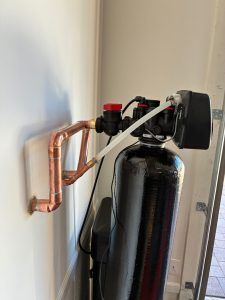
Over time, the resin becomes loaded with hardness minerals. The system regenerates by flushing the resin with a brine solution made from the salt stored in the brine tank. The captured minerals are rinsed away, allowing the resin to continue softening the water.
This process produces actual soft water.
What Changes After Installing a Salt-Based Softener?
Homeowners commonly notice:
- Soap and shampoo lathering more easily
- Less soap needed for cleaning
- Fewer hard mineral deposits on fixtures
- Less stubborn scale in showers
- A different feeling on the skin
- Reduced hardness reaching the water heater
- Less mineral accumulation inside water-using appliances
A softener does not make housekeeping disappear. Softened water can still leave marks caused by dust, soap, silica, or other dissolved material. It specifically addresses calcium and magnesium hardness.
Why Does Soft Water Feel Slippery?
Some people like the feel of softened water immediately. Others need time to get used to it.
Hardness minerals react with soap and can leave residue on the skin. Once those minerals are removed, soap behaves differently and the skin’s natural oils are not stripped away in the same way. This can create a smoother or more slippery sensation.
That feeling does not necessarily mean soap is still on your skin. It is a normal difference many homeowners notice after switching from hard water to soft water.
If your household strongly dislikes that feeling, it should be part of the system-selection conversation.
What Maintenance Does a Salt-Based Softener Need?
A salt-based system requires regular attention, but the amount depends on its size, settings, household use, and water hardness.
Typical maintenance includes:
- Keeping an appropriate amount of salt in the brine tank
- Breaking up a salt bridge if one develops
- Watching for excessive salt use
- Checking for leaks
- Cleaning the brine tank when needed
- Having the system evaluated if the water begins feeling hard again
- Following the manufacturer’s service recommendations
A properly sized and programmed system should not regenerate more frequently than necessary. If it is using an unusual amount of salt or constantly running regeneration cycles, the system may need to be adjusted or serviced.
Does a Salt-Based Softener Put Salt in Your Drinking Water?
A traditional softener does not pour salt directly into every glass of water. The ion-exchange process replaces hardness minerals with sodium or potassium ions.
The amount of sodium added depends partly on how hard the untreated water is. The City of Mesa explains that sodium increases by approximately 8 milligrams per liter for each grain of hardness removed.
For example, softening water with 12 grains per gallon of hardness could add approximately 96 milligrams of sodium per liter.
Many homes keep the kitchen cold-water line unsoftened or pair the whole-home softener with a reverse osmosis system for drinking and cooking water. If someone in the household follows a medically restricted sodium diet, system design should be discussed with their healthcare provider and water-treatment professional.
How Does a Salt-Free Water Conditioner Work?
Salt-free conditioners come in several forms, and they do not all use the same technology.
Some systems use media designed to alter the physical behavior of calcium and magnesium so the minerals are less likely to attach to surfaces as hard scale. Template-assisted crystallization, commonly shortened to TAC, is one example.
Because the minerals remain in the water, a hardness test performed after treatment may show approximately the same hardness level as before treatment.
The goal is scale control, not hardness removal.
What Does a Salt-Free Conditioner Change?
A properly selected conditioner may help reduce how firmly mineral scale attaches to certain plumbing surfaces.
However, homeowners should have realistic expectations:
- The water will still contain calcium and magnesium.
- Hardness test results will not drop like they do with a softener.
- Soap may not lather noticeably better.
- Water may not feel softer on the skin.
- Spots can still appear on glass and fixtures.
- Existing heavy scale will not disappear immediately.
- Performance depends on the equipment and water conditions.
Be cautious when a salt-free product is advertised as providing every benefit of a traditional softener. If the product does not remove hardness minerals, it should not be expected to produce the same experience as softened water.
Do Salt-Free Conditioners Require No Maintenance?
“Maintenance-free” is often overstated.
A salt-free conditioner does eliminate the need to buy and carry bags of softener salt. It may also operate without electricity, regeneration, or a drain connection.
The treatment media still has a service life. Some systems require sediment or carbon prefiltration, and those filters must be replaced. Water conditions can also affect how well the media performs and how long it lasts.
Before purchasing a system, ask:
- What treatment method does it use?
- What does the manufacturer say it will reduce?
- Has its scale-control performance been independently tested?
- Does it require pretreatment?
- How long does the media typically last?
- What replacement parts will be needed?
- What is covered by the warranty?
A system with less maintenance is not the same as a system with no maintenance.
Which System Handles Arizona Hard Water Better?
If your goal is to remove hardness and create truly soft water, a salt-based softener is generally the more direct and predictable option.
Hardness levels vary across the Valley. Mesa reports approximately 12 to 22 grains per gallon, depending on the source supplying the area. Phoenix has reported hardness levels of approximately 8.6 to 16.8 grains per gallon.
Water at those levels can leave noticeable mineral deposits on faucets, shower doors, dishes, and water-heating equipment.
A salt-free conditioner may still make sense if your priority is scale control and you specifically want to avoid salt, brine discharge, and regeneration. It simply should not be purchased with the expectation that it will provide every benefit of actual soft water.
Choose a Salt-Based Softener If You Want:
- Measurably softer water
- Calcium and magnesium removed
- Better soap and detergent performance
- Less traditional hard-water scale
- A noticeable change in how the water feels
- Stronger treatment for substantial hardness
- More protection from hardness entering water-using equipment
You should also be comfortable with adding salt, allowing the system to regenerate, and providing the installation requirements the equipment needs.
Consider a Salt-Free Conditioner If You Want:
- Scale control without removing hardness minerals
- No softener salt
- No soft-water feeling
- No brine regeneration
- Less routine handling of supplies
- A system that may not require a drain or electrical connection
A conditioner is more likely to meet your expectations when you understand that the water will remain chemically hard.
Will Either System Make the Water Safer to Drink?
Water hardness is not the same as unsafe water.
Calcium and magnesium are naturally occurring minerals. The City of Mesa describes hard water as an aesthetic and household concern rather than a health risk. The City of Phoenix also states that its tap water meets applicable drinking-water standards.
A water softener is designed to address hardness. It should not automatically be treated as a solution for chlorine, sediment, total dissolved solids, or specific contaminants.
If your concern is drinking-water taste or contaminant reduction, you may need filtration or reverse osmosis rather than, or in addition to, hardness treatment.
The right system depends on what is actually in the water and what you want removed.
Will a Water Conditioner Remove Existing Scale?
Do not expect years of hardened mineral buildup to disappear immediately after installing any system.
A conditioner may help reduce new scale adhesion, depending on its technology and the water conditions. A softener can prevent additional calcium and magnesium hardness from entering the treated plumbing.
Existing deposits may still need to be cleaned from fixtures, serviced inside appliances, or addressed during plumbing repairs.
Be cautious of guarantees that every existing deposit throughout the house will simply dissolve.
Can You Use a Softener and Reverse Osmosis Together?
Yes. The two systems perform different jobs.
A whole-home softener addresses calcium and magnesium before the water travels through the home. An under-sink reverse osmosis system treats water at a specific drinking-water faucet.
This combination can provide softened water for bathing, laundry, cleaning, and water-using appliances while supplying separately treated water for drinking and cooking.
Whether that combination makes sense depends on your water, available space, plumbing layout, and household priorities.
How Should a Water Softener Be Sized?
A system should not be selected based only on the number of bathrooms.
When we evaluate a home, we consider:
- Measured water hardness
- Household size
- Typical water consumption
- Peak water demand
- Available flow rate
- Plumbing size
- Available installation space
- Whether the home has a softener loop
- Drain and electrical access
- The homeowner’s maintenance preferences
An undersized system may regenerate too frequently or struggle to keep up with demand. An unnecessarily large system may cost more without providing a meaningful benefit.
Water testing and an inspection of the installation area should come before the final recommendation.
What If the House Already Has a Water-Softener Loop?
A loop can make installation more straightforward, but it does not tell us which system the home needs.
We still need to confirm:
- Which fixtures the loop supplies
- Whether exterior irrigation is excluded
- Where the drain will discharge
- Whether electrical power is available
- The size and condition of the plumbing
- Whether the loop was installed correctly
- How drinking-water lines are routed
It is better to confirm the plumbing layout than assume every pipe near the garage was intended for the same purpose.
Which System Should You Choose?
Start with the outcome you want.
If you want actual soft water, improved soap performance, and hardness minerals removed before they reach your fixtures and appliances, choose a properly sized salt-based water softener.
If your primary goal is reducing scale adhesion without using salt or producing regeneration discharge, consider a professionally selected salt-free conditioner. Just understand that it will not make the water chemically soft.
We do not recommend choosing based solely on a salesperson’s promise or the word “saltless” on a product label. Test the water, define your goals, review the installation requirements, and make sure the equipment is designed for the conditions at your home.
Get a Recommendation Based on Your Water
Rad Plumbing installs water-treatment systems for homeowners dealing with hard water throughout Mesa and surrounding Valley communities.
We can test your water, inspect the existing plumbing, discuss what you want to improve, and recommend a system that matches those goals without pretending that every treatment method provides the same result.
Frequently Asked Questions

Author: Rob Radcliff
Rob Radcliff, founder and CEO of Rad Plumbing, has been serving the Greater Phoenix area with exceptional plumbing services for over two decades.
