
A toilet can be old, stained, and unattractive but still worth repairing. A newer toilet can look perfectly fine and need to be replaced immediately.
What matters is not only the toilet’s age. It is what has failed, whether the porcelain is sound, how often the problem returns, and whether the trouble is actually coming from the toilet at all.
We get called for toilets that run all night, leak around the base, rock against the floor, or clog every few days. In many of those homes, replacing a flapper, fill valve, wax ring, or flange solves the problem. In others, continuing to repair the same fixture would only postpone an inevitable replacement.
The short answer is that a toilet should usually be repaired when the porcelain is intact and the problem involves a replaceable component. Replacement makes more sense when the bowl or tank is cracked, clogs keep returning, mineral buildup has restricted the internal waterways, or several repairs have already failed.
Here is how we make that decision in a homeowner’s bathroom.
1. The Toilet Keeps Running
A toilet that runs constantly is annoying, but it does not automatically need to be replaced.
In most cases, the problem is somewhere inside the tank. A worn flapper may not be sealing properly. The fill valve may no longer shut off consistently. The flush valve, chain, float, or tank gasket may also be involved.
These components can usually be replaced without removing the entire toilet.
The decision becomes less straightforward when several internal parts are deteriorating at once or someone has already attempted multiple repairs. Universal replacement parts do not always fit or operate correctly in every toilet. Some older and specialty models also use parts that are difficult or expensive to locate.
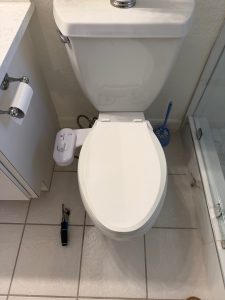
If a toilet has been repaired repeatedly and still refills on its own, runs after every flush, or causes unexplained increases in the water bill, we look at the entire fixture before recommending another part.
Likely recommendation: Repair, unless the toilet is old, inefficient, or experiencing repeated component failures.
2. There Is Water Around the Base
Water around the toilet should never be ignored. Even a small amount can seep beneath the flooring and damage the subfloor before the homeowner sees how far it has traveled.
The source is not always the toilet itself. Water may be coming from:
- A failed wax ring
- A damaged toilet flange
- A loose or leaking supply connection
- Tank bolts or a tank-to-bowl gasket
- Condensation on the tank
- A crack in the tank or bowl
- Water from a nearby shower, tub, or sink
A failed wax ring does not necessarily mean the toilet needs to be replaced. If the porcelain is sound and the toilet is otherwise performing well, it may only need to be removed, properly reset, and sealed.
A damaged flange may also be repairable. However, the surrounding floor needs to be evaluated, especially if the leak has been present for some time.
If the water is escaping through cracked porcelain, replacement is the correct response.
Likely recommendation: Diagnose first. Repair the seal, connection, or flange when possible. Replace the toilet if the porcelain is cracked.
3. The Tank or Bowl Is Cracked
A crack changes the conversation.
Hairline marks in a toilet can sometimes be manufacturing lines in the finish rather than structural damage. A plumber can determine whether the mark is superficial or extends through the porcelain.
A confirmed crack in the bowl or tank should be taken seriously. Porcelain cannot be safely restored to its original strength with sealant or an adhesive. A repair that appears to stop visible moisture does not make the fixture structurally sound.
Cracks can grow as the toilet is used or as water temperature changes. If the crack opens, the toilet may release a significant amount of water onto the bathroom floor.
A cracked bowl also creates a safety concern because it supports the user’s weight. This is not a problem we recommend watching to see if it gets worse.
Likely recommendation: Replace the toilet and avoid using it until it has been evaluated.
4. The Toilet Clogs Over and Over
One clog does not mean you need a new toilet. A toilet that clogs every week is telling us something else is wrong.
The obstruction might be inside the toilet’s trapway. A small object can become lodged where a plunger cannot reach it. Older toilets may also have narrower or poorly designed trapways that do not move waste effectively.
However, the toilet may not be the real problem.
Recurring clogs can also point to:
- A restriction farther down the drain
- A damaged sewer line
- Tree-root intrusion
- Improper drain slope
- A blocked plumbing vent
- Too little water entering the bowl during the flush
- Mineral buildup restricting the rim jets or internal waterways
If other fixtures are draining slowly or backing up, replacing the toilet will not solve the underlying drain problem. In that situation, professional diagnosis or a sewer camera inspection may be appropriate.
We do not recommend replacing a toilet for recurring clogs until we know whether the problem is in the fixture or the plumbing connected to it.
Likely recommendation: Inspect the toilet and drain first. Replace the toilet only when its design, trapway, or internal condition is responsible.
5. The Toilet Has a Weak or Incomplete Flush
A weak flush can make a perfectly usable toilet feel like it is worn out.
Sometimes the cause is a tank that is not filling to the proper level. The flapper may be closing too quickly, the fill valve may not be operating correctly, or the chain may not be adjusted properly. Those are generally repairable problems.
Arizona’s hard water adds another possibility.
Minerals can accumulate around the small openings under the toilet rim and inside passageways that direct water into the bowl. As those openings become restricted, the toilet may lose the force and water distribution it needs for a complete flush.
If the restriction is accessible and the rest of the toilet is in good condition, professional service may restore its performance. If mineral buildup has heavily restricted inaccessible internal waterways, replacement may be more practical.
Before replacing the toilet, we also check whether the drain is moving water correctly. A drain problem can make the flush look weak even when the toilet is operating as designed.
Likely recommendation: Repair or service the fixture when the cause is accessible. Consider replacement when internal mineral restriction or poor toilet design prevents reliable flushing.
6. The Toilet Rocks or Moves on the Floor
A toilet should feel solid when someone sits down. If it rocks, shifts, or makes contact with the floor unevenly, the movement can weaken the wax seal and lead to a leak underneath the fixture.
Possible causes include:
- Loose mounting bolts
- A damaged toilet flange
- An uneven floor
- A poorly installed toilet
- Deteriorated flooring beneath the fixture
- Damage around the toilet’s mounting points
Tightening the bolts is not always the answer. Porcelain can crack when bolts are overtightened, and tightening them will not correct a broken flange or damaged subfloor.
If the toilet itself is undamaged, it may be possible to repair the mounting problem and reset the same fixture. When the porcelain around a mounting point is cracked or the toilet has already been damaged by movement, replacement is safer.
Likely recommendation: Repair the mounting or flange problem when the fixture is sound. Replace the toilet if the porcelain is damaged.
7. The Toilet Is Old, Inefficient, and Repeatedly Needs Repairs
Age by itself is not a reason to replace a toilet. A quality fixture can remain in service for many years when the porcelain is sound and replacement parts remain available.
Age matters more when it is combined with other problems.
A replacement becomes easier to justify when the toilet:
- Uses substantially more water than a modern fixture
- Has already required several repairs
- Clogs frequently
- Has a weak flush that cannot be corrected
- Uses discontinued or difficult-to-find parts
- Has extensive mineral buildup
- No longer fits the household’s accessibility needs
According to the EPA WaterSense program, certified toilets use no more than 1.28 gallons per flush and must meet performance requirements. Older toilets may use 3.5 gallons or more every time they are flushed.
That difference can add up in a busy household.
Some homeowners remember early low-flow toilets that performed poorly and assume every efficient model will have the same problem. Modern WaterSense toilets are independently certified for both water efficiency and flushing performance. Choosing a dependable model and having it installed correctly are more important than simply choosing the toilet with the lowest advertised water use.
Likely recommendation: Consider replacement when high water use is combined with recurring repairs, poor performance, or mineral restriction.
What Arizona Hard Water Does to a Toilet
Hard water usually does not destroy the porcelain bowl itself. The trouble develops in the components and narrow waterways responsible for filling and flushing.
Mineral deposits can collect on:
- Fill valves
- Flappers and seals
- Tank components
- Rim jets
- Siphon jets
- Supply connections
- Internal passages within the toilet
A white ring in the bowl is mostly a cleaning problem. Mineral restriction inside a rim jet or flush passage is a performance problem.
When we inspect a weak or slow toilet, we look at the whole system. Replacing a fill valve will not solve a restricted drain. Replacing the toilet will not solve a sewer-line problem. Clearing a drain will not fix a cracked bowl.
Getting the diagnosis right is what prevents the homeowner from paying for the wrong solution.
When Is a Toilet Problem Urgent?
Some toilet problems can wait for a normal appointment. Others should be addressed promptly to protect the home.
Stop using the toilet and call for service when:
- The bowl or tank is cracked
- Water appears around the base after flushing
- The toilet rocks noticeably
- Water is spreading into nearby flooring
- Sewage backs up into the toilet, tub, or shower
- Multiple fixtures are backing up
- The toilet overflows repeatedly
- The shutoff valve will not stop the incoming water
If water or sewage is actively spreading, contact an emergency plumber rather than continuing to flush or test the toilet.
A Few Straight Answers Before You Call
Does a failed wax ring mean the toilet needs to be replaced?
Usually not. If the porcelain is intact and the toilet performs properly, it can often be removed and reset with a new seal. The flange and surrounding floor should be inspected at the same time.
Can a cracked toilet be repaired?
A confirmed crack in the tank or bowl is a reason to replace the fixture. Sealants do not restore the strength of cracked porcelain, and the crack may continue to spread.
Should an old toilet always be replaced?
No. Condition and performance matter more than age alone. Replacement becomes more attractive when age is accompanied by frequent repairs, poor flushing, high water use, or unavailable parts.
Why does the toilet keep clogging after it was replaced?
The obstruction may be in the drain or sewer line instead of the toilet. If the problem continues with a new fixture, the connected plumbing should be evaluated.
Should every toilet in the house be replaced at the same time?
Not necessarily. Each toilet can be evaluated individually. Homeowners sometimes replace several at once for matching appearance, efficiency, or convenience, but a working toilet does not have to be replaced simply because another one failed.
Will a new toilet flush better with less water?
A properly selected WaterSense toilet can use less water while still providing dependable performance. Model quality, trapway design, installation, and the condition of the connected drain all matter.
What We Look at Before Recommending Replacement
When Rad Plumbing evaluates a toilet, we are not only looking at the visible symptom.
We check the porcelain, tank components, seals, supply connection, mounting, flange, flush performance, and drainage. If the problem involves a replaceable part and the rest of the fixture is in good condition, repair is usually the sensible recommendation.
If the toilet is cracked, repeatedly fails, wastes excessive water, or cannot flush correctly because of its internal condition, we will explain why replacement makes more sense.
The purpose of the inspection is to solve the problem, not to automatically sell a new fixture.
Get an Honest Toilet Repair or Replacement Recommendation
If your toilet keeps running, leaking, rocking, or clogging, Rad Plumbing can determine whether the fixture needs a straightforward repair or whether replacement will provide better long-term value.
Our general plumbing services include toilet repairs, fixture replacement, leak diagnosis, and professional installation throughout Mesa and the surrounding Phoenix area.
Contact Rad Plumbing or call (602) 905-2624 to schedule toilet service.

Author: Rob Radcliff
Rob Radcliff, founder and CEO of Rad Plumbing, has been serving the Greater Phoenix area with exceptional plumbing services for over two decades.
