
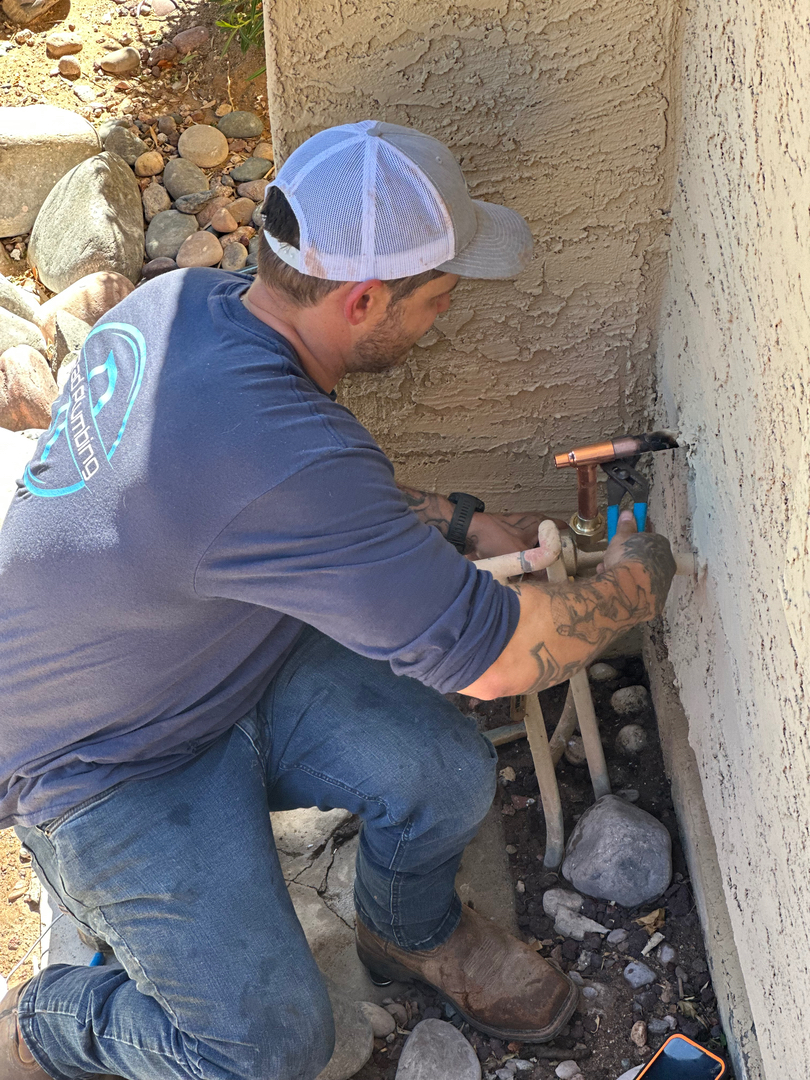
Most homeowners do not call a plumber and say, “I think my water pressure is too high.”
They call because a toilet keeps running, a faucet has started dripping again, the pipes bang when a fixture shuts off, or the water heater is releasing water. Each problem may look unrelated. Sometimes the connection is excessive water pressure pushing against every valve, seal, hose, and fixture in the house.
Strong pressure can feel great in the shower, but more pressure is not always better. If the pressure is higher than your plumbing system is designed to handle, it can shorten the life of fixtures and appliances while increasing the risk of a leak.
Here are the signs we would want a homeowner to take seriously.
How Do You Know If Your Water Pressure Is Too High?
Common signs of high water pressure include banging pipes, unusually forceful faucets, recurring toilet problems, dripping fixtures, leaking supply lines, and water being released from the water heater’s relief valve.
You may notice only one symptom at first. As the problem continues, repairs can begin showing up in different parts of the house.
The only way to know the actual pressure is to test it with a pressure gauge. A plumber can also determine whether the pressure remains steady, drops too far while water is running, or slowly climbs when every fixture is turned off.
1. Water Blasts Out of Faucets and Showerheads
One of the most noticeable signs is water coming out with more force than it should.
You may see water splash out of the sink, spray outside the bowl, or hit the shower wall unusually hard. Faucets may also become difficult to control because a small movement of the handle creates a large change in flow.
A strong stream by itself does not prove that the pressure is unsafe. Some fixtures simply have higher flow rates than others. But if the force has changed throughout the house or seems excessive at several fixtures, it is worth having the pressure checked.
2. Pipes Bang When the Water Shuts Off
If you hear a thud, knock, or bang when a faucet, toilet, dishwasher, or washing machine stops using water, the plumbing system may be experiencing water hammer.
Water moving through a pipe has momentum. When a valve closes quickly, that movement stops suddenly and creates a pressure wave inside the plumbing. Excessive pressure can make the noise and vibration more severe.
The sound may travel through walls or ceilings, so the noise is not always coming from the fixture you just used. Repeated movement can put additional stress on pipe connections and supports.
Banging pipes can have more than one cause. A plumber should look at the system as a whole instead of assuming that one noisy pipe is the entire problem.
3. Toilets Keep Running or Need Frequent Repairs
A toilet that starts running again shortly after being repaired may be reacting to more than a worn internal part.
High pressure can make it harder for the toilet’s fill valve to close and remain closed properly. That can cause intermittent running, unexpected refilling, or continued wear on the valve.
One toilet problem does not necessarily mean the entire house has excessive pressure. If multiple toilets develop similar problems, or new toilet parts keep failing, whole-home pressure should be part of the diagnosis.
Otherwise, you may continue replacing the symptom without addressing what is causing the repeated wear.
4. Faucets Begin Dripping Again
Faucet cartridges, seals, and valves are designed to hold back water within a normal operating range. When pressure remains excessive, those components are forced to work harder even when the faucet is turned off.
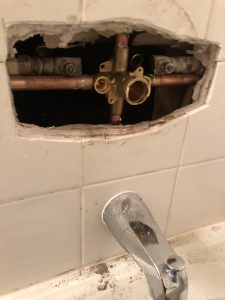
You might notice:
- A faucet that begins dripping
- Water collecting around a handle
- A fixture that is becoming difficult to shut off
- A recently repaired faucet leaking again
- Several fixtures developing leaks within a short period
Normal age and mineral buildup can also cause faucet leaks. Arizona’s hard water makes that distinction especially important. Sometimes a fixture is simply worn out. Other times, hard water and excessive pressure are working together to shorten its life.
A plumber can inspect the fixture and test the pressure instead of making assumptions based on the drip alone.
5. Appliance Hoses or Supply Lines Are Leaking
Flexible supply lines connect water to toilets, faucets, washing machines, dishwashers, refrigerators, and other appliances.
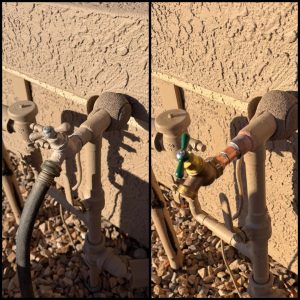
These lines may be small, but they remain under pressure whenever the water supply is on. Excessive pressure places additional strain on the hose, fittings, seals, and shutoff valves.
Warning signs can include:
- Moisture around a supply connection
- Corrosion near a fitting
- Bulging or damaged hoses
- Water beneath an appliance
- Repeated failures of supply lines
- Shutoff valves that begin leaking
A failed washing machine hose or appliance connection can release a considerable amount of water before anyone notices. If one supply line has failed, it is reasonable to inspect the others and confirm that whole-home pressure is not contributing to the problem.
6. Your Water Heater Relief Valve Is Dripping
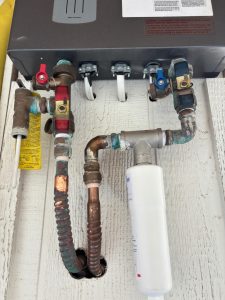
Water coming from the temperature and pressure relief valve on a water heater should not be ignored.
The valve is a safety device. Its job is to release water under certain temperature or pressure conditions. If it is dripping or opening repeatedly, the water heater and the home’s pressure-control components should be evaluated.
Possible causes include:
- Excessive incoming water pressure
- Thermal expansion inside a closed plumbing system
- A failed or waterlogged expansion tank
- A problem with the relief valve
- A water heater temperature issue
- More than one condition happening at the same time
This is not a situation where the valve should be capped, plugged, or disabled. Doing so can remove an important safety function.
Call a plumber to determine why the valve is releasing water and whether the problem involves the water heater, the pressure regulator, the expansion tank, or another part of the system.
7. Plumbing Repairs Keep Piling Up
One leaking faucet is common. A toilet repair followed by a failed supply line, another dripping faucet, and a leaking appliance connection deserves a closer look.
When several pressure-sensitive components fail within a relatively short period, we start looking for a shared cause.
High pressure may not create an immediate flood. It often causes gradual wear throughout the plumbing system. The homeowner ends up paying for a series of smaller repairs without realizing that all of them may be connected.
Testing the water pressure can help determine whether those failures are isolated or part of a larger pattern.
8. The Pressure Changes Throughout the Day
Some variation in municipal water pressure is normal. Demand changes as people use more or less water in the surrounding area.
What is not normal is a dramatic or persistent increase inside the house.
Some homeowners notice that the pressure seems more forceful late at night or early in the morning. Others notice that the pressure is normal while a fixture is running but rises again after every faucet is shut off.
That behavior may indicate:
- High pressure entering from the municipal supply
- A failing pressure-reducing valve
- Pressure creep through the regulator
- Thermal expansion as stored water heats
- A combination of regulator and expansion-control problems
A single pressure reading may not capture a problem that changes over time. A plumber may need to compare pressure under different conditions to understand what is happening.
What Water Pressure Is Too High for a House?
Water pressure is measured in pounds per square inch, commonly written as PSI.
The City of Phoenix states that water pressure above 80 PSI requires action by the home or business owner because it can damage pipes and appliances. The city also explains that pressure conditions after the water meter are generally the property owner’s responsibility. City of Phoenix water-pressure guidance
The best operating pressure for a particular home depends on the plumbing layout, elevation, fixtures, and other system conditions. The important point is that pressure should be safe, stable, and appropriate for the home.
If a reading is above 80 PSI, or the pressure changes significantly when no water is being used, have a plumber evaluate it.
What Is a Water Pressure Regulator?
A water pressure regulator, also called a pressure-reducing valve or PRV, reduces the incoming municipal water pressure before that pressure reaches the plumbing inside the home.
It is usually installed near the point where the main water supply enters the property, although the exact location varies.
The regulator is supposed to maintain a more manageable and consistent pressure throughout the house. Like other mechanical components, it can wear out, collect mineral deposits, or stop controlling pressure correctly.
What Are the Signs of a Failing Pressure Regulator?
A failed regulator does not always create the same symptom.
Depending on how it fails, you may experience:
- Pressure that is consistently too high
- Pressure that is unusually low
- Pressure that changes from strong to weak
- Pressure that slowly rises when no water is running
- Banging or vibrating pipes
- Repeated fixture and valve problems
- A water heater relief valve that begins dripping
This is why a regulator should not be diagnosed based on how the shower feels. The system needs to be tested.
Can You Lower Water Pressure With the Main Shutoff Valve?
A main shutoff valve is not a water pressure regulator.
Partially closing the main valve may restrict how much water can move through the pipe, but it does not properly control static pressure throughout the plumbing system. Pressure and flow are related, but they are not the same thing.
This confusion comes up frequently among homeowners. Someone notices forceful water and begins turning valves without knowing whether the valve serves the water system, irrigation, or gas.
If you are unsure which valve or device you are looking at, leave it alone and call a plumber. Adjusting the wrong component can create a dangerous or expensive problem.
Why Does the Pressure Drop When a Faucet Is Open?
Water pressure measured while every fixture is closed is called static pressure. Pressure measured while water is flowing is commonly called dynamic pressure.
A house can have extremely high static pressure and still experience a large pressure drop when a faucet opens. This may point to a restriction, undersized component, failing regulator, partially closed valve, or another supply problem.
In other words, strong pressure when nothing is running does not guarantee that the system can deliver adequate water volume when several fixtures are used.
A proper evaluation looks at both conditions.
Can High Water Pressure Increase Your Water Bill?
High pressure can contribute to increased water use because more water may pass through a fixture during the same amount of time.
It can also make small leaks worse. A running toilet, dripping faucet, or leaking supply connection may lose more water when it is constantly exposed to excessive pressure.
If your bill has increased without an obvious change in household use, the plumbing system should be checked for leaks as well as pressure problems.
Can High Water Pressure Cause a Pipe to Burst?
Excessive pressure increases stress on pipes, joints, valves, hoses, and fixtures. Whether a failure occurs depends on the material, age, condition, installation, and severity of the pressure problem.
The weakest part of the system may fail first. That could be an appliance hose, toilet connector, faucet cartridge, shutoff valve, or an already weakened pipe.
High pressure does not mean a pipe will burst immediately. It does mean the system is working under more stress than it should, which is not something to ignore.
High Pressure or Hard Water: Which One Is Causing the Damage?
Arizona homes frequently deal with hard water, and hard water can create mineral buildup on fixtures and inside some plumbing components.
High pressure and hard water are different problems, but they can occur together.
Hard water may leave scale, restrict openings, and interfere with moving parts. High pressure places greater force on those same components. When both conditions are present, faucets, valves, water heaters, and appliances may require attention sooner.
A plumber can test the pressure and inspect for visible mineral buildup. That gives you a better answer than blaming every plumbing problem on Arizona water.
When Should You Call a Plumber?
Call a plumber if you notice several signs of high water pressure, receive a reading above 80 PSI, or see water being released from the water heater’s relief valve.
You should also schedule an evaluation when:
- Plumbing fixtures keep failing
- Several toilets run intermittently
- Supply lines are leaking
- The pressure changes dramatically
- Pipes bang throughout the house
- A home inspector reports high pressure
- You suspect the pressure regulator has failed
- The system has high static pressure but weak flow
If water is actively leaking, shut off the appropriate water supply only if you can identify it safely, then contact a plumber promptly.
What Will a Plumber Check?
A professional pressure evaluation may include:
- Measuring static water pressure
- Checking pressure while fixtures are operating
- Watching for pressure that rises while no water is being used
- Inspecting the pressure regulator
- Evaluating the water heater relief valve
- Checking the expansion tank when one is present
- Looking for leaking fixtures and supply connections
- Determining whether the issue affects one fixture or the entire house
The goal is not simply to lower a number on a gauge. It is to understand why the pressure is high and correct the condition without creating new flow or water-heater problems.
Do Not Wait for the Next Leak
High water pressure is easy to overlook because the plumbing may seem to work well. The shower feels strong, the fixtures fill quickly, and there may be no obvious emergency.
Meanwhile, every pressure-sensitive component in the house is working harder than it should.
If your pipes bang, toilets keep running, fixtures are failing, or the water heater is releasing water, have the system checked before another repair appears.
RAD Plumbing can test your home’s water pressure, inspect the components that control it, and explain what the system needs in straightforward terms.
Contact RAD Plumbing for a professional plumbing evaluation.
Frequently Asked Questions

Author: Rob Radcliff
Rob Radcliff, founder and CEO of Rad Plumbing, has been serving the Greater Phoenix area with exceptional plumbing services for over two decades.
